
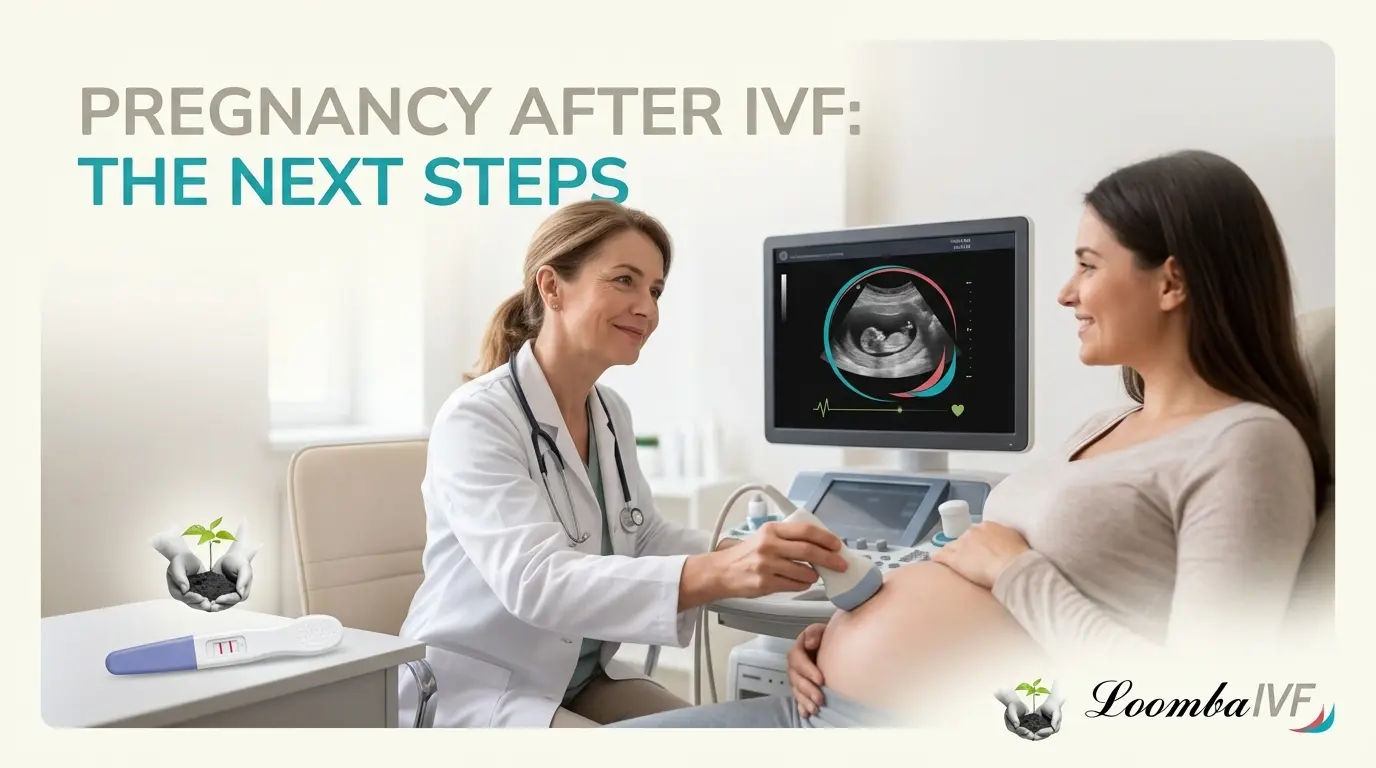
Seeing a positive pregnancy test after IVF can be one of the most emotional moments in your fertility journey. After weeks or months of appointments, medications, monitoring and waiting, the result can bring enormous happiness—along with many questions.
What happens next? When should you have a blood test? When is the first ultrasound? Should you continue progesterone or other prescribed medicines? What symptoms are normal, and which ones need urgent medical attention?
If you are searching for the best IVF hospital in Ambala for continued fertility and pregnancy care, it is important to understand that a positive test is the beginning of another important stage: early pregnancy monitoring.
At Loomba IVF, Ambala, pregnancy care includes fertility follow-up and prenatal support. The clinic lists IVF, pregnancy testing, pregnancy counselling and prenatal care among its services.
After a positive IVF pregnancy test, your fertility team will usually confirm the pregnancy with quantitative beta-hCG testing, review your medicines, plan an early ultrasound and monitor the pregnancy before transitioning you to ongoing obstetric care.
What Does a Positive Pregnancy Test After IVF Mean?
A positive urine or blood pregnancy test means that human chorionic gonadotropin (hCG) has been detected.
After IVF, however, a positive result is not the only milestone doctors need to assess. The next goals are to determine:
- Whether the pregnancy is developing appropriately.
- Whether hCG is rising as expected for the individual pregnancy.
- Whether the pregnancy is located inside the uterus.
- Whether an early pregnancy sac and, later, an embryo with cardiac activity can be identified.
- Whether any symptoms require additional assessment.
A quantitative beta-hCG blood test can provide a measured hCG value and may be repeated when clinically appropriate. Importantly, one hCG number alone does not determine whether a pregnancy will continue normally.
Your doctor interprets the result together with your dates, symptoms, treatment history and ultrasound findings.
What Happens After a Positive IVF Pregnancy Test?
Step 1: Confirm the pregnancy with beta-hCG
Your fertility clinic may ask you to have a blood beta-hCG test after the scheduled pregnancy-test date.
Depending on the result and your individual circumstances, the doctor may recommend another blood test after an appropriate interval to assess the trend.
Do not compare your beta-hCG number with someone else’s result online. Early pregnancy hormone levels can vary considerably, and clinical interpretation depends on the complete picture.
Step 2: Continue prescribed medicines
Many IVF patients are prescribed medicines to support the treatment cycle and early pregnancy.
Depending on your IVF protocol, these may include progesterone or other medications.
Do not stop IVF medicines on your own after seeing a positive pregnancy test.
Continue medications exactly as instructed by your fertility specialist until your doctor tells you to change or stop them.
If you have questions about a medicine, supplement or painkiller, ask your fertility or obstetric team before taking it.
Step 3: Schedule the first pregnancy ultrasound
An early ultrasound is an important part of follow-up after assisted conception.
The timing depends on factors such as the embryo-transfer date, beta-hCG results, symptoms and your doctor’s clinical protocol.
An ultrasound may be used to determine whether the pregnancy is developing in the uterus and to assess early pregnancy structures. Ultrasound is particularly important in early pregnancy when ectopic pregnancy is suspected or when the location of the pregnancy needs confirmation.
Sometimes an early scan is performed before all expected structures can be clearly seen. This does not automatically mean something is wrong. If the pregnancy is very early, your doctor may recommend a repeat scan after several days.
Step 4: Confirm the pregnancy location and development
One of the important objectives of early pregnancy monitoring is confirming that the pregnancy is located inside the uterus.
An ectopic pregnancy occurs when a pregnancy develops outside the uterus, most commonly in a fallopian tube. Assisted reproductive technology, including IVF, is one of the factors associated with increased ectopic-pregnancy risk.
This is why early follow-up after IVF matters even when the pregnancy test is clearly positive.
What to Expect During the First Few Weeks After IVF
The period between the positive test and the first ultrasound can feel surprisingly long.
You may experience:
- Mild abdominal cramping
- Breast tenderness
- Fatigue
- Nausea
- Bloating
- Increased urination
- Mild changes in appetite
- Emotional ups and downs
Some women have very few symptoms, while others experience several.
The absence of pregnancy symptoms does not necessarily mean that the pregnancy is not progressing. Similarly, having strong symptoms does not guarantee that everything is normal.
Your medical follow-up and ultrasound are more useful than trying to judge pregnancy development from symptoms alone.
Pregnancy After IVF: Symptoms You May Notice
Early pregnancy symptoms after IVF can overlap with symptoms caused by fertility medicines, particularly progesterone.
For example, bloating, breast tenderness and fatigue may occur because of hormonal treatment as well as pregnancy.
Therefore, avoid interpreting every physical sensation as a sign of pregnancy progression.
Instead, follow your clinic’s testing and monitoring schedule.
If you experience new, persistent or concerning symptoms, contact your fertility specialist or obstetrician.
What Should You Do After a Positive IVF Pregnancy Test?
Once your pregnancy has been confirmed, practical steps can make the next few weeks easier.
1. Keep your follow-up appointments
Do not skip scheduled beta-hCG testing or ultrasound appointments.
Early pregnancy monitoring helps your doctor identify problems that may require attention.
2. Take prescribed medicines correctly
Create a simple medication schedule if necessary.
Never discontinue progesterone or another prescribed IVF medicine without medical advice.
3. Start or continue prenatal supplements as advised
Your doctor can recommend appropriate prenatal supplementation based on your medical history, diet and pregnancy needs.
4. Follow healthy pregnancy habits
In general, focus on:
- A balanced diet
- Adequate hydration
- Appropriate physical activity as advised
- Adequate sleep
- Avoiding tobacco and alcohol
- Taking medicines only after appropriate medical advice
5. Keep your fertility and pregnancy records
Keep copies of:
- IVF treatment details
- Embryo-transfer date
- Beta-hCG results
- Ultrasound reports
- Medication list
- Previous pregnancy records
- Relevant blood-test reports
These records can make communication between your fertility specialist and obstetrician easier.
When Should You Contact Your Doctor Immediately?
Most early-pregnancy symptoms are not emergencies. However, certain symptoms require prompt medical assessment.
Seek urgent medical attention if you develop:
- Severe or worsening abdominal or pelvic pain
- Significant vaginal bleeding
- Severe pain mainly on one side
- Shoulder-tip pain associated with concerning symptoms
- Dizziness, fainting or marked weakness
- Sudden severe pain with bleeding
These symptoms can sometimes occur with ectopic pregnancy or internal bleeding and should not be ignored. A ruptured ectopic pregnancy can be a medical emergency.
If you are in Ambala and have severe symptoms, seek emergency medical care rather than waiting for a routine fertility appointment.
Prenatal Care After IVF
Once early pregnancy is confirmed and your doctor is satisfied with the initial development, care gradually moves from fertility-treatment monitoring into routine pregnancy care, while taking your individual medical history into account.
Prenatal care may include:
- Regular obstetric appointments
- Blood-pressure monitoring
- Blood and urine investigations
- Ultrasound examinations
- Screening for pregnancy-related conditions
- Nutritional guidance
- Fetal growth and wellbeing assessments
- Advice regarding activity, medication and lifestyle
The exact schedule varies from person to person.
Pregnancy resulting from IVF does not mean that every patient will have complications. However, your doctor may recommend individualized monitoring based on your age, medical history, fertility treatment, pregnancy findings and other risk factors.
ACOG notes that ultrasound uses sound waves rather than ionizing radiation, and it is widely used during pregnancy to examine the developing pregnancy and fetus.
Why Choose Loomba IVF for Pregnancy Care in Ambala?
Choosing a fertility centre is not only about IVF treatment. For many couples, continuity of care after a positive pregnancy test is equally important.
Loomba IVF in Ambala states that it provides fertility, pregnancy and women’s healthcare services, including prenatal care.
The clinic’s published team information identifies Dr. Poonam Loomba, MD Obstetrics and Gynaecology, as a director of Loomba Hospital and IVF Centre.
According to the clinic’s published history, Loomba IVF was established as an IVF/ART centre in Haryana in 2003 and reports that Dr. Poonam Loomba has more than 35 years of experience, with training including IVF/ICSI at Cleveland Clinic in the United States and advanced ultrasound training at Harvard.
The clinic also describes services covering fertility assessment, IVF, prenatal care, gynecological wellness and support for both women’s and men’s reproductive health.
For patients in Ambala, Ambala Cantt and nearby areas, having fertility and pregnancy-related services in one location can make follow-up more convenient.
However, the right fertility and pregnancy-care plan should always be based on your individual medical needs rather than a generic promise of success.
A Positive IVF Test Is the Start of a New Journey
A positive pregnancy test after IVF is an important milestone—but it is only the first step in confirming a healthy early pregnancy.
The next stage usually involves:
Positive test → beta-hCG assessment → prescribed medication → early ultrasound → confirmation of pregnancy location and development → ongoing prenatal care
Try not to judge your pregnancy based only on symptoms or online comparisons.
Instead, stay in contact with your fertility team, attend your scheduled appointments and report concerning symptoms promptly.
For couples in Ambala looking for an IVF clinic that also provides pregnancy and prenatal support, Loomba IVF offers fertility and pregnancy services under the same healthcare setup.
Looking for IVF and pregnancy care in Ambala?
If you have recently received a positive pregnancy test after IVF and want professional guidance about your next beta-hCG test, ultrasound, medicines or prenatal-care plan, consult your fertility specialist.
Loomba IVF
Jagadhari Rd, Punjabi Mohalla, Sadar Bazar, Ambala Cantt, Haryana 133001
Phone: +91-98961-26520
Hours: Monday–Saturday, 9:00 AM–7:00 PM; Sunday closed
Book or enquire through Loomba IVF’s official website. The clinic’s published contact page lists the Ambala Cantt address and contact numbers.

Frequently Asked Questions
Clear, practical answers to common questions after a positive IVF pregnancy test and during early pregnancy monitoring.