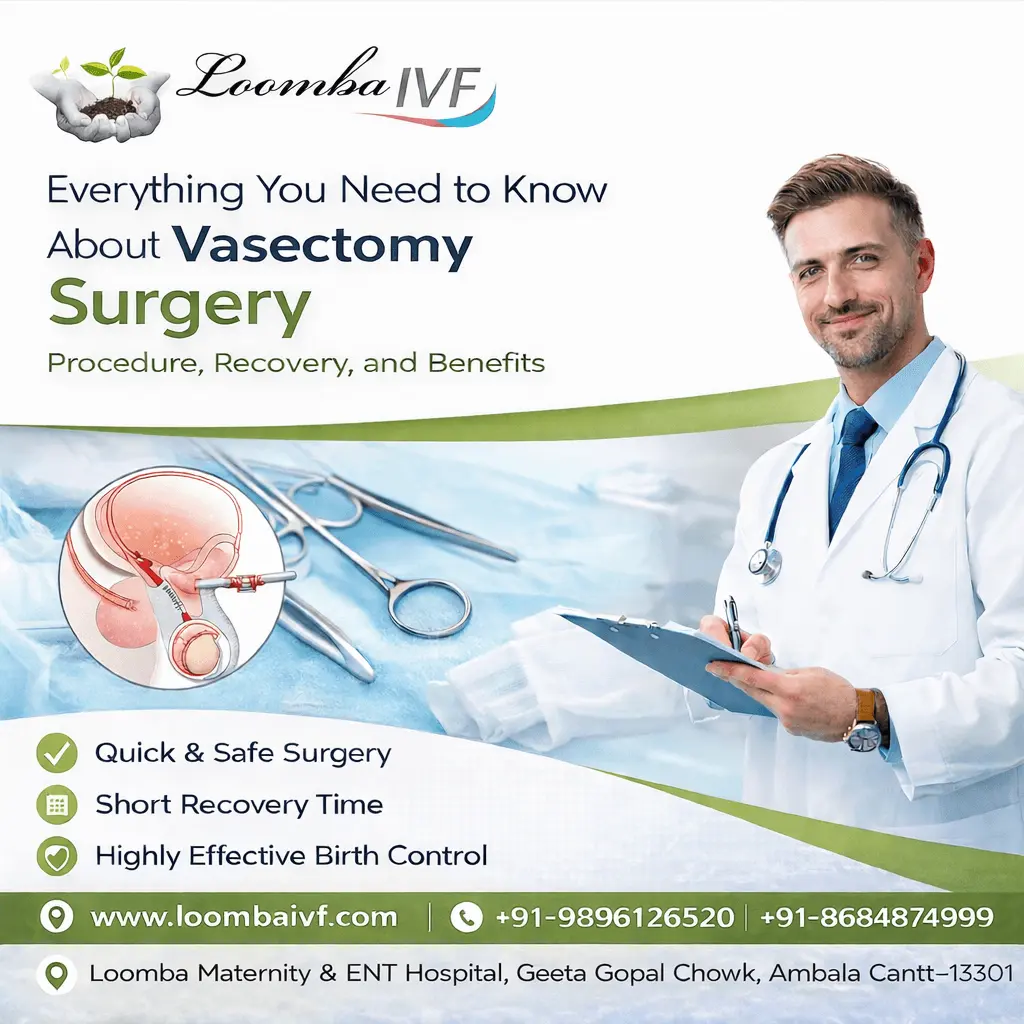
Vasectomy surgery is a safe, reliable, and permanent method of male contraception. It is increasingly chosen by couples who have completed their family and want a long-term birth control solution without affecting sexual performance or overall health. Despite being a common medical procedure, many men still have questions and misconceptions about vasectomy.
At Loomba IVF, we believe that informed decisions lead to better health outcomes. This guide explains vasectomy surgery in a clear, medically accurate, and patient-friendly way—covering the procedure, benefits, recovery, risks, and long-term expectations.
What Is Vasectomy Surgery?
Vasectomy surgery is a minor surgical procedure that prevents sperm from mixing with semen during ejaculation. This is done by cutting or blocking the vas deferens—the tubes that carry sperm from the testicles.
After a vasectomy:
- Semen is still ejaculated
- Testosterone levels remain unchanged
- Sexual desire and performance are not affected
- Pregnancy is permanently prevented
Vasectomy is considered over 99% effective, making it one of the most reliable contraceptive methods available.
Why Is Vasectomy Surgery Done?
Vasectomy surgery is recommended for men who:
- Have completed their family
- Want a permanent contraception option
- Prefer a simpler alternative to female sterilization
- Want to avoid long-term contraceptive use by their partner
Many couples opt for vasectomy surgery in Ambala as it is a safe, quick, and cost-effective solution when performed by trained specialists in a clinical setting.
How Is Vasectomy Surgery Performed?
Vasectomy is usually an outpatient procedure and takes about 15–30 minutes.
Types of Vasectomy Surgery
| Type | Description |
| Conventional Vasectomy | Small incisions are made to access and cut the vas deferens |
| No-Scalpel Vasectomy | A tiny puncture is made, reducing bleeding and recovery time |
Both methods are medically approved and equally effective when performed correctly.
Step-by-Step Procedure
- Local anesthesia is administered
- The vas deferens is identified and blocked
- The incision or puncture is closed
- Patient is discharged the same day
Is Vasectomy Surgery Painful?
Vasectomy surgery causes minimal discomfort. Most patients describe:
- Mild pressure during the procedure
- Slight soreness for a few days after surgery
Pain is usually managed with prescribed medication and rest.
What Is the Recovery Process Like?
Recovery after vasectomy surgery is generally quick and uncomplicated.
Recovery Timeline
- Day 1–2: Mild swelling or discomfort
- 3–5 days: Resume light daily activities
- 7 days: Return to work (non-physical jobs)
- 2 weeks: Resume exercise and sexual activity
Post-Surgery Care Tips
- Wear supportive underwear
- Avoid heavy lifting
- Apply cold packs if advised
- Take medications as prescribed
Full sterility is achieved only after follow-up semen analysis confirms the absence of sperm.
What Are the Benefits of Vasectomy Surgery?
Vasectomy surgery offers several long-term advantages:
- Permanent and highly effective contraception
- No impact on hormones or masculinity
- No effect on sexual performance or pleasure
- One-time procedure with lifelong benefit
- Lower risk and simpler than female sterilization
From a public health and family planning perspective, vasectomy is a responsible and medically sound choice.
Are There Any Risks or Side Effects?
Vasectomy surgery is very safe when performed under standard medical protocols. However, as with any surgical procedure, some risks may include:
- Temporary swelling or bruising
- Mild infection (rare)
- Short-term pain or discomfort
- Very rare chance of vasectomy failure
All procedures are performed following standard urological and reproductive health guidelines, ensuring patient safety and optimal outcomes.
Can Vasectomy Be Reversed?
Vasectomy should be considered permanent. Although reversal procedures exist, they:
- Are complex
- Are not always successful
- May not restore fertility fully
Men considering vasectomy surgery should be fully confident about their family planning decisions before proceeding.
Does Vasectomy Affect Sexual Life or Testosterone?
No. Vasectomy does not:
- Reduce testosterone levels
- Affect erections or ejaculation
- Reduce sexual desire
In fact, many couples report improved sexual confidence due to the absence of pregnancy concerns.
When Should You Consider Vasectomy Surgery in Ambala?
You may consider vasectomy surgery in Ambala if:
- You and your partner agree on permanent contraception
- You want a safe, one-time solution
- You prefer specialist-led care in a trusted medical facility
At Loomba IVF, patient counseling, confidentiality, and evidence-based care are integral parts of the treatment process.
Consult with Specialists at Loomba IVF
Choosing vasectomy surgery is a personal and significant decision. Proper counseling, medical evaluation, and expert execution are essential for long-term satisfaction and safety.
If you are considering vasectomy surgery in Ambala, the experienced medical team at Loomba IVF is committed to providing ethical guidance, advanced care, and complete confidentiality. Book a consultation today to discuss whether vasectomy surgery is the right choice for you and your family.
Frequently Asked Questions (FAQs)
1. Is vasectomy surgery safe?
Yes, vasectomy surgery is a medically approved and widely practiced procedure with a very high safety profile.
2. How long does vasectomy surgery take?
The procedure usually takes 15–30 minutes and is performed on an outpatient basis.
3. When does vasectomy become effective?
It becomes effective only after follow-up semen tests confirm zero sperm count, usually after 8–12 weeks.
4. Can I resume normal life after vasectomy?
Yes, most men return to normal activities within a few days, following medical advice.
5. Does vasectomy protect against STDs?
No. Vasectomy prevents pregnancy but does not protect against sexually transmitted diseases.
6. Who should not undergo vasectomy surgery?
Men who are unsure about future childbearing or are under emotional pressure should delay the decision.